




Solar Installation Timeline Explained for California Homeowners

The average timeline is 3-6 months, but utility delays and permitting can extend your wait. Here's what actually happens—and how US Power gets you connected faster.
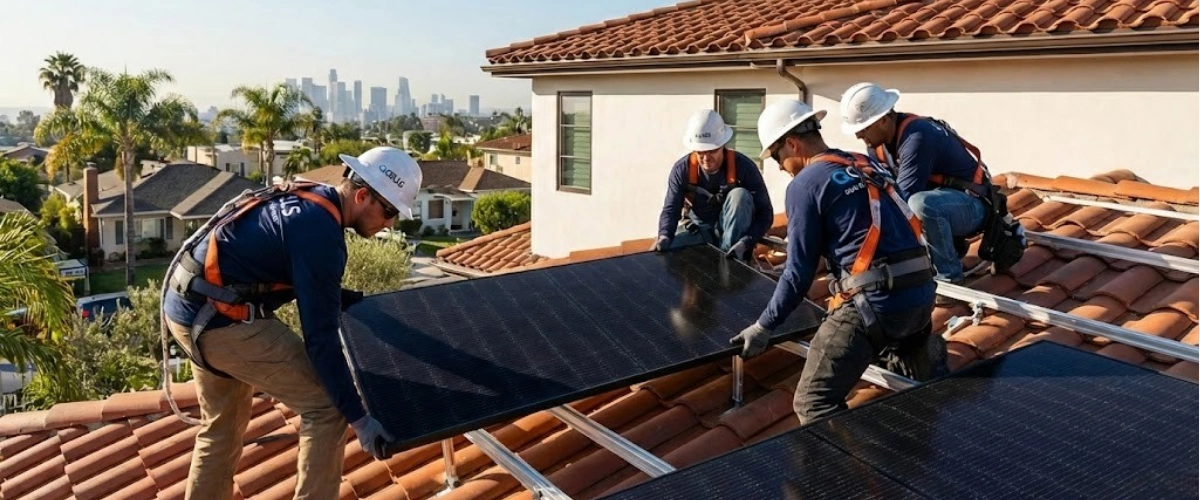
You've decided solar makes sense. SCE rates hit 34.5¢ per kWh in 2026, with peak hours reaching 74¢. You're ready to lock in predictable energy costs and stop watching bills increase every year.
But here's the question every Southern California homeowner asks: How long will this actually take?
The honest answer? Most solar installations in California take 3 to 6 months from contract signing to your system going live. But the timeline isn't random—specific bottlenecks cause delays, and working with the right installer can cut weeks off your wait.
Why Solar Installation Timelines Vary in Southern California
Not all solar projects take the same time. A straightforward rooftop system in Orange County might move faster than a complex solar-plus-battery setup in Los Angeles. Here's what determines your timeline.
Local Permitting Takes 4 to 8 Weeks
Los Angeles County has some of California's strictest building codes. While this protects homeowners, solar permitting in California typically takes 4 to 8 weeks—sometimes longer during peak application periods.
Cities like Burbank, Pasadena, and Long Beach each have unique permitting processes. Some use SolarAPP+ for streamlined approvals (days instead of weeks), but many still require full plan review, structural calculations, and multiple correction rounds.
Utility Interconnection Delays Are Common
Even after installation and inspection, you can't activate your system until your utility approves interconnection and issues PTO (Permission to Operate).
According to 2026 California Solar & Storage Association data, SCE and PG&E meet mandated interconnection timelines only 27% to 45% of the time for certain review steps. Most homeowners wait 2 to 4 weeks beyond official timelines—sometimes stretching to 6 or 8 weeks during busy periods.
Battery Storage Adds Complexity Under NEM 3.0
Battery systems require additional electrical work and separate permits in some jurisdictions. But under NEM 3.0, batteries aren't optional—they're essential for ROI.
Southern California homeowners installing solar without batteries lose 75% of their export electricity value. Understanding how solar batteries maximize your savings matters as much as timeline concerns.
The Solar Installation Process: Week by Week
Here's what actually happens during a typical solar installation in Southern California.
Weeks 1-2: System Design and Engineering
Your installer creates a custom system design based on roof layout, electricity usage, and energy goals. This includes detailed roof measurements, electrical panel assessment, equipment selection, and production estimates.
US Power completes this phase in 5 to 7 days. We work exclusively with QCells equipment, so we're not juggling multiple brands or waiting on supplier quotes—we have direct factory access and standardized design processes.
Weeks 3-6: Permitting and Approvals
This is where most delays happen. Your installer submits permit applications to your local building department for review of structural calculations, electrical diagrams, fire setback requirements, and utility interconnection agreements.
Los Angeles and Orange County permits typically take 4 to 6 weeks. Some cities move faster—Irvine and Mission Viejo often approve within 2 to 3 weeks. Rural areas can stretch to 8 weeks.
Weeks 7-8: Equipment Procurement
While permits process, equipment is ordered. Lead times vary by manufacturer—typically 1 to 3 weeks for panels and inverters. Battery systems sometimes require longer procurement periods.
US Power's exclusive QCells partnership means we maintain priority inventory access. When permits clear, your equipment is ready.
Weeks 8-9: Physical Installation
Once permits approve, installation crews arrive for what to expect during installation. Physical work typically takes 1 to 3 days depending on system size:
- Day 1: Roof mounting, panel installation, rough electrical work
- Day 2: Inverter/battery installation, system wiring, final connections
- Day 3: Testing and cleanup (for larger systems)
US Power's in-house teams complete most residential projects in one day for solar-only systems, or 2 days for solar-plus-battery installations.
Weeks 10-11: Local Building Inspection
After installation, your local building department inspects for code compliance. Inspections typically happen within 1 to 2 weeks of scheduling. Most systems pass on the first try.
Common inspection delays include missing labels, improper wire routing, or incomplete documentation. Experienced installers rarely face reinspections because they follow strict quality checklists.
Weeks 12-16: Utility Interconnection (PTO)
The final step—and often the longest wait. Your utility reviews interconnection applications, verifies grid safety standards, installs new meters if needed, and issues Permission to Operate.
SCE's official timeline is 15 business days, but actual performance averages 3 to 4 weeks. During peak solar season, some homeowners wait 6+ weeks. This is outside your installer's control, but experienced companies submit clean applications that minimize delays.
How US Power Speeds Up Your Solar Installation
While the average California solar project takes 5 to 6 months, US Power completes most installations in 3 to 4 weeks after permits approve. Here's how.
Factory-Direct QCells Partnership
We're the exclusive QCells partner in Southern California. That means QCells factory-direct pricing and guaranteed equipment availability. When permits clear, we're not scrambling to order panels—they're already allocated to your project.
In-House Installation Teams
Every crew member is a US Power employee with specialized QCells training. We don't subcontract labor or coordinate with rotating companies. Your project team knows our processes, follows our quality standards, and has installed hundreds of identical systems.
Streamlined Permitting Experience
Our design team submits thousands of permit applications annually across Los Angeles, Orange, Ventura, San Bernardino, and Riverside counties. We know exactly what each jurisdiction requires, which documentation formats they prefer, and how to avoid common rejections.
This expertise shaves weeks off permitting. While other companies submit applications that bounce back for corrections, our first-submission approval rate exceeds 90%.
Proactive Utility Coordination
We don't just submit your interconnection application and wait. Our team follows up with SCE and PG&E regularly, resolves questions quickly, and escalates when timelines slip.
When comparing installers, ask about average timeline from contract to PTO. If they say "4 to 6 months" without specifics, that's a red flag. Companies that track and manage every phase make a huge difference. For guidance on choosing a reliable solar company, do your research before signing.
Why Southern California Homeowners Can't Afford to Wait
Electricity rates aren't just high—they're accelerating. SCE rates increased 83% over the past 10 years, with a 13% jump in October 2025 alone. Average residential rates now sit at 34.5¢ per kWh, and peak Time-of-Use rates reach 74¢ during the 4-9 PM window.
For homeowners using 700 to 900 kWh monthly, that translates to $210 to $280 bills. The California Public Utilities Commission has approved rate increases through 2028 for grid modernization and wildfire mitigation programs.
Solar panels lock in your electricity costs. Instead of paying whatever SCE charges next year, you generate your own power at a fixed cost. When rates increase another 10% in 2027, your electricity price stays the same.
Every month you delay is another month paying increasing rates. If you're spending $240 monthly now, waiting 6 months costs $1,440 in avoidable utility bills. For context on why rates keep climbing, see Understanding Sce's Time-Of-Use Rates.
Common Timeline Delays and How to Avoid Them
Even with the best installer, certain situations can extend your timeline.
Roof Repairs or Replacement Needs
If your roof is approaching end-of-life, replace it before installing solar. Removing and reinstalling panels later costs $3,000 to $5,000. Most solar warranties require roofs with at least 10 years of remaining life.
Electrical Panel Upgrades
Older homes with 100-amp or 125-amp panels sometimes need upgrades to safely accommodate solar and battery systems. This adds 1 to 2 weeks and $1,500 to $3,000 to costs.
US Power identifies these requirements during initial site assessments—no surprises after contract signing.
HOA Approval Processes
California's Solar Rights Act prevents HOAs from unreasonably restricting solar. But you still need to submit applications and wait for architectural review board meetings—which might only happen monthly.
Start your HOA approval process early, ideally before signing contracts. Most HOAs approve within 30 to 45 days.
Take Control of Your Electricity Costs Today
Solar installation timelines in California average 3 to 6 months, but working with US Power reduces that to 3 to 4 weeks after permits clear. The key is choosing a company with proven processes, in-house teams, and strong utility relationships.
With electricity rates at record highs and continuing to climb, the best time to start is now. Every month you delay is another month paying increasing utility bills—money that could be building equity in your own power system.
US Power has completed 180+ five-star installations across Southern California with American-made QCells panels, 25-year comprehensive warranties, and factory-direct pricing that saves 15% to 20% compared to market rates. We handle every step from permits to PTO so your project moves fast and finishes right.
Ready to see how fast you can start saving? Get your free consultation today.
Frequently Asked Questions
How can I speed up my solar installation timeline?
What's the longest part of the solar installation process?
Can I use my solar system before getting PTO approval?
Does adding battery storage significantly extend installation time?
Why do some solar companies take 6+ months while others finish in 8 weeks?


kW vs. kWh: Comparing Watts to Kilowatts and Kilowatt-Hours
Understand how to track watts, kW, and kWh to save on electricity efficiently.

4 Ways Californians Can Lower Demand Charges
Cut peak power costs in California with four smart ways to reduce demand charges.
Cómo los paneles de tejados y las iniciativas comunitarias
California homes are saving billions via rooftop solar and shared community power.








Derechos de autor © 2025 US POWER | Energía solar y techosUS Power - Axia by QCells. All Rights Reserved.

¡Obtenga una estimación solar instantánea usando el satélite!